
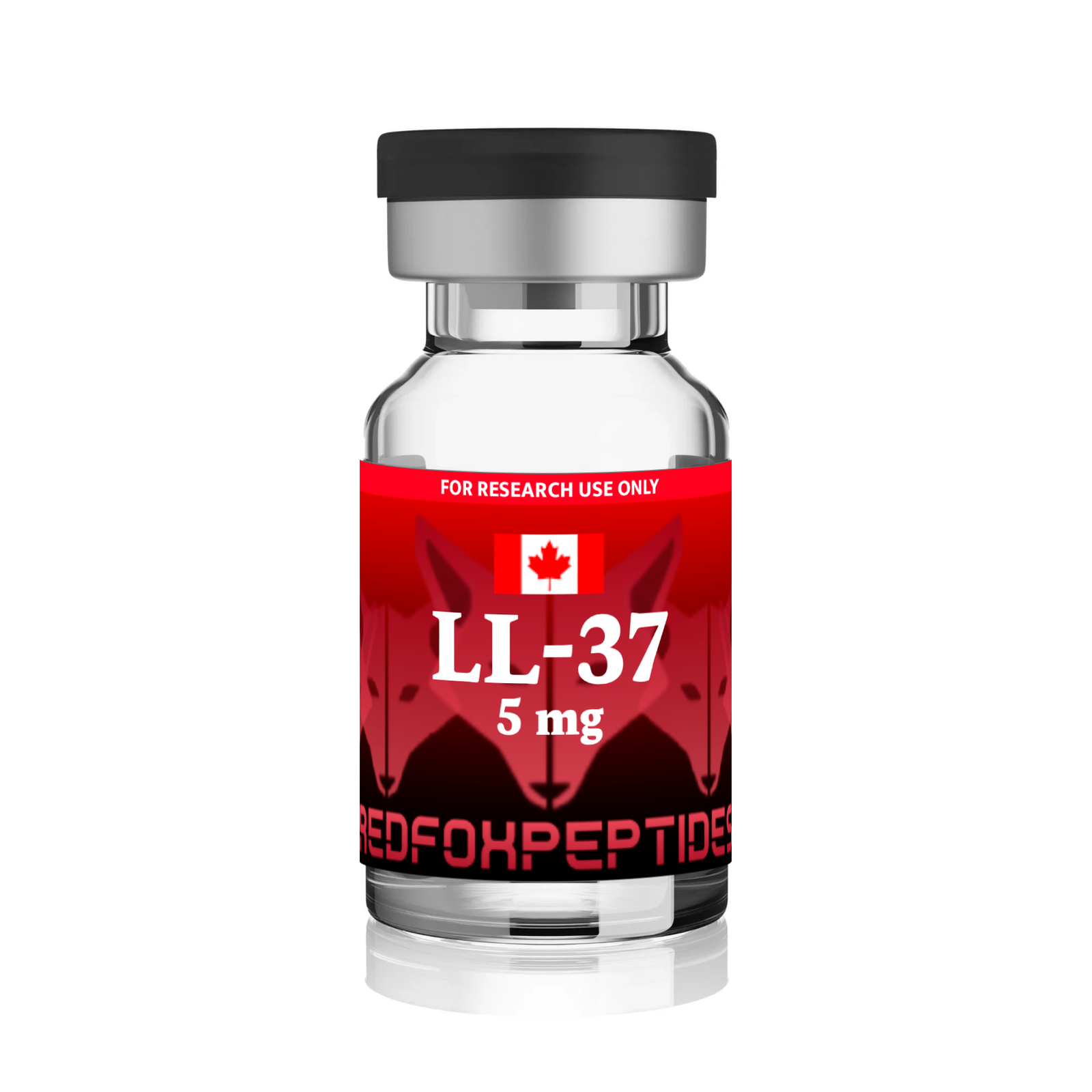
LL-37 (Antimicrobial Peptide) – 5 mg
$55.00
Looking to buy LL-37 in Canada? This powerful, naturally occurring Antimicrobial Peptide (AMP) is a critical component of the body’s innate immune system, the first line of defense against pathogens. It plays a dual role, acting as both a direct weapon against microbes and an immune system modulator.
- Ships from BC, Canada (2-4 Day Delivery)
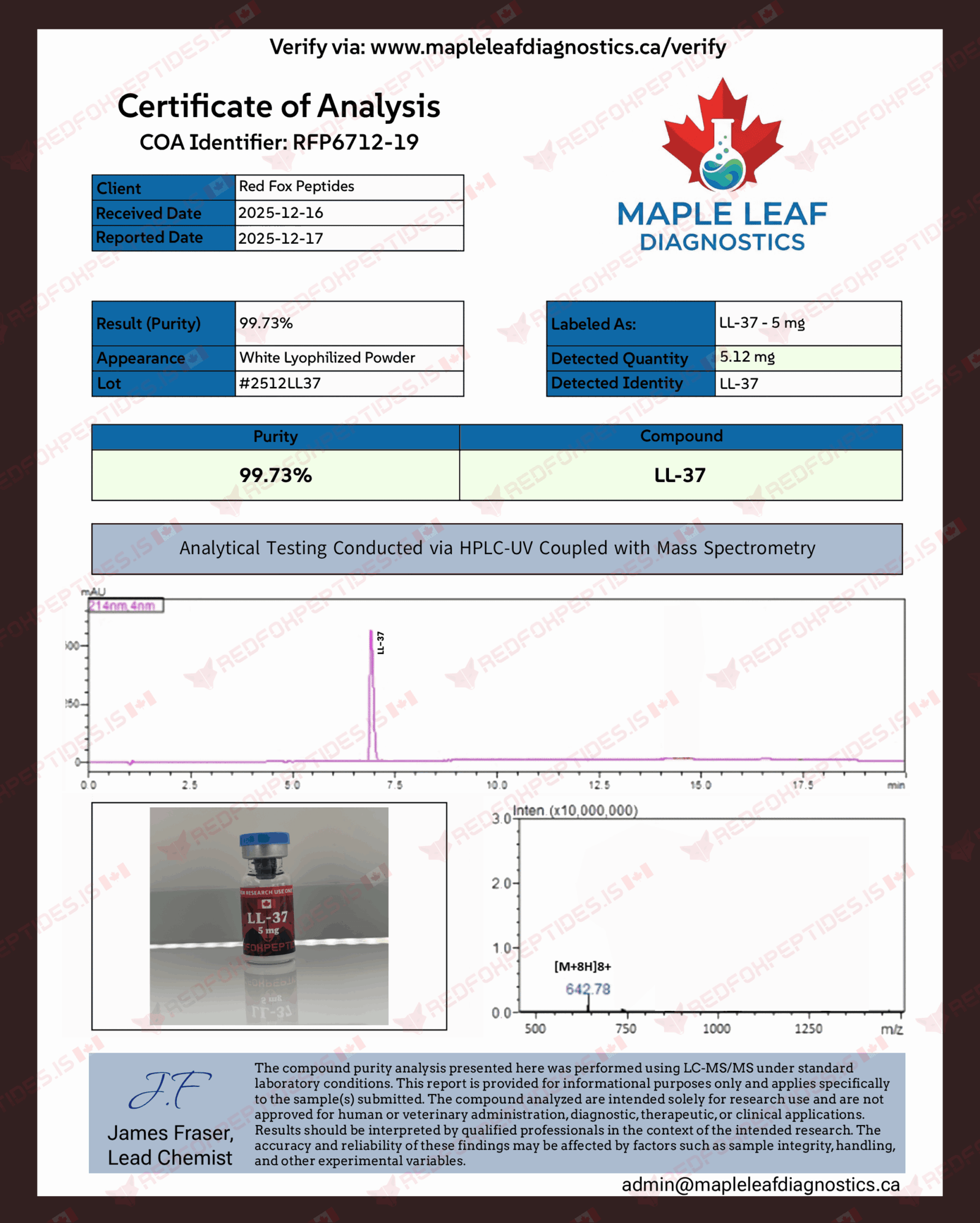
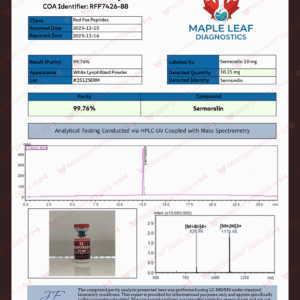
- 3rd Party Tested by Maple Leaf Diagnostics
- Achieves a Greater Than 99% Purity
- Best Price In Canada with Price Matching
ll37 peptide, Looking to buy LL-37 in Canada? This powerful, naturally occurring Antimicrobial Peptide (AMP) is a critical component of the body’s innate immune system, the first line of defense against pathogens. It plays a dual role, acting as both a direct weapon against microbes and an immune system modulator.
- Ships from BC, Canada (2-4 Day Delivery)
- 3rd Party Tested by Maple Leaf Diagnostics
- Achieves a Greater Than 99% Purity
- Best Price In Canada with Price Matching
Before You Buy LL-37, Here Is What You Need To Know
LL-37 is a fascinating research peptide, it acts as both a direct killer of pathogens and a master regulator of the immune system and tissue repair.
1. Direct Antimicrobial Action: Membrane Disruption: ll37 peptide
LL-37’s most famous function is its ability to directly kill a broad spectrum of microbes, including Gram-positive and Gram-negative bacteria, fungi, and certain enveloped viruses. This is achieved primarily through its unique biophysical structure:
- Cationic and Amphipathic Nature: LL-37 is a cationic peptide (it has a net positive charge of +6) and is amphipathic (it has both water-loving/hydrophilic and fat-loving/hydrophobic sides).
- Targeting Microbial Membranes: Bacterial cell membranes, unlike human cell membranes, are highly anionic (negatively charged) due to components like lipopolysaccharide (LPS). The positive charge of LL-37 is strongly and selectively attracted to the negative charge of the bacterial membrane.
- Pore Formation and Lysis: Once bound, this peptide changes its structure into an alpha-helix and inserts itself into the membrane. It then aggregates with other LL-37 molecules, forming transmembrane pores or channels. This disrupts the bacteria’s membrane integrity, causing cell contents to leak out, leading to rapid cell death (lysis).
- Intracellular Targets: Beyond the membrane, this peptide can also penetrate the cell and interfere with vital internal processes, such as DNA/RNA synthesis and protein function, providing a second line of attack.
2. Immunomodulation: Bridging Innate and Adaptive Immunity
LL-37 acts as a signaling molecule to fine-tune the body’s defensive response, a process called immunomodulation.
- Chemotaxis (Recruitment of Cells): It acts as a chemoattractant, using receptors like FPRL1 (Formyl Peptide Receptor-Like 1) to call various immune cells, including neutrophils, monocytes, and T cells, to the site of infection or injury.
- Cytokine Regulation: LL-37 can stimulate the release of pro-inflammatory chemicals (cytokines and chemokines) to launch the defense, but it can also actively inhibit the over-activation of certain Toll-like Receptors (TLRs) by binding to bacterial components like LPS, thus preventing an excessive or damaging inflammatory response (which is key in conditions like sepsis).
- Anti-Biofilm Activity: At concentrations far lower than those needed to directly kill bacteria, LL-37 powerfully prevents bacteria from forming biofilms (the protective, slimy matrices that make chronic infections highly resistant to conventional antibiotics).
3. Tissue Repair and Regeneration: ll37 peptide
LL-37 is vital for healing, linking the process of clearing infection directly to repairing the damage.
- Cell Migration and Proliferation: It promotes the migration and division of cells involved in skin and tissue repair, such as keratinocytes and fibroblasts, which are essential for closing wounds.
- Angiogenesis: It encourages the formation of new blood vessels (angiogenesis), which is necessary to bring nutrients and oxygen to the healing tissue.
The science of LL-37 revolves around its cationic, amphipathic structure, which allows it to selectively disrupt microbial membranes while simultaneously binding to host cell receptors to organize, regulate, and resolve the immune response and repair damaged tissue.
Be the first to review “LL-37 (Antimicrobial Peptide) – 5 mg”
Related products
Repair & Recovery
Reviews
There are no reviews yet.